

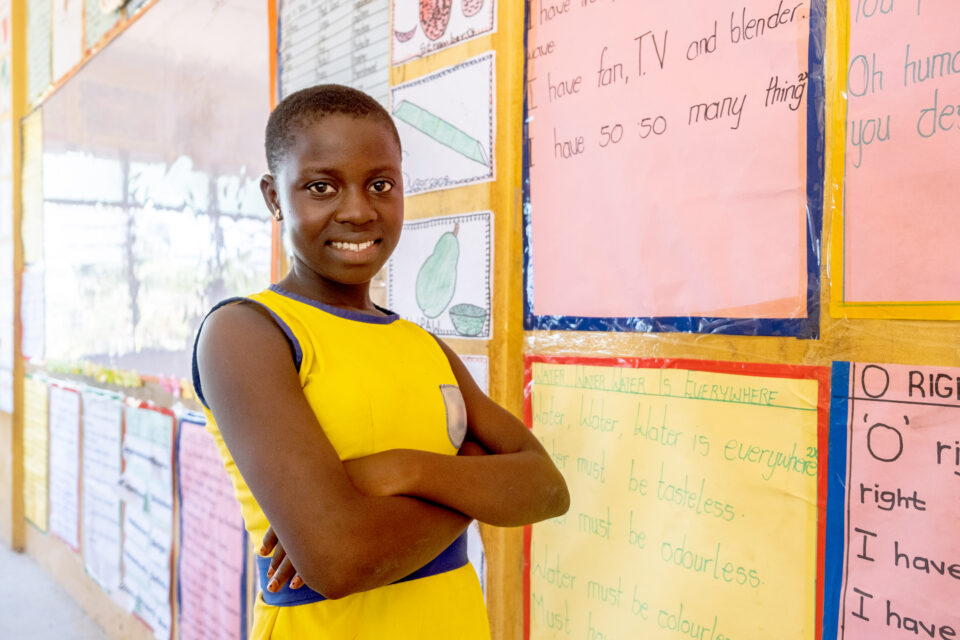
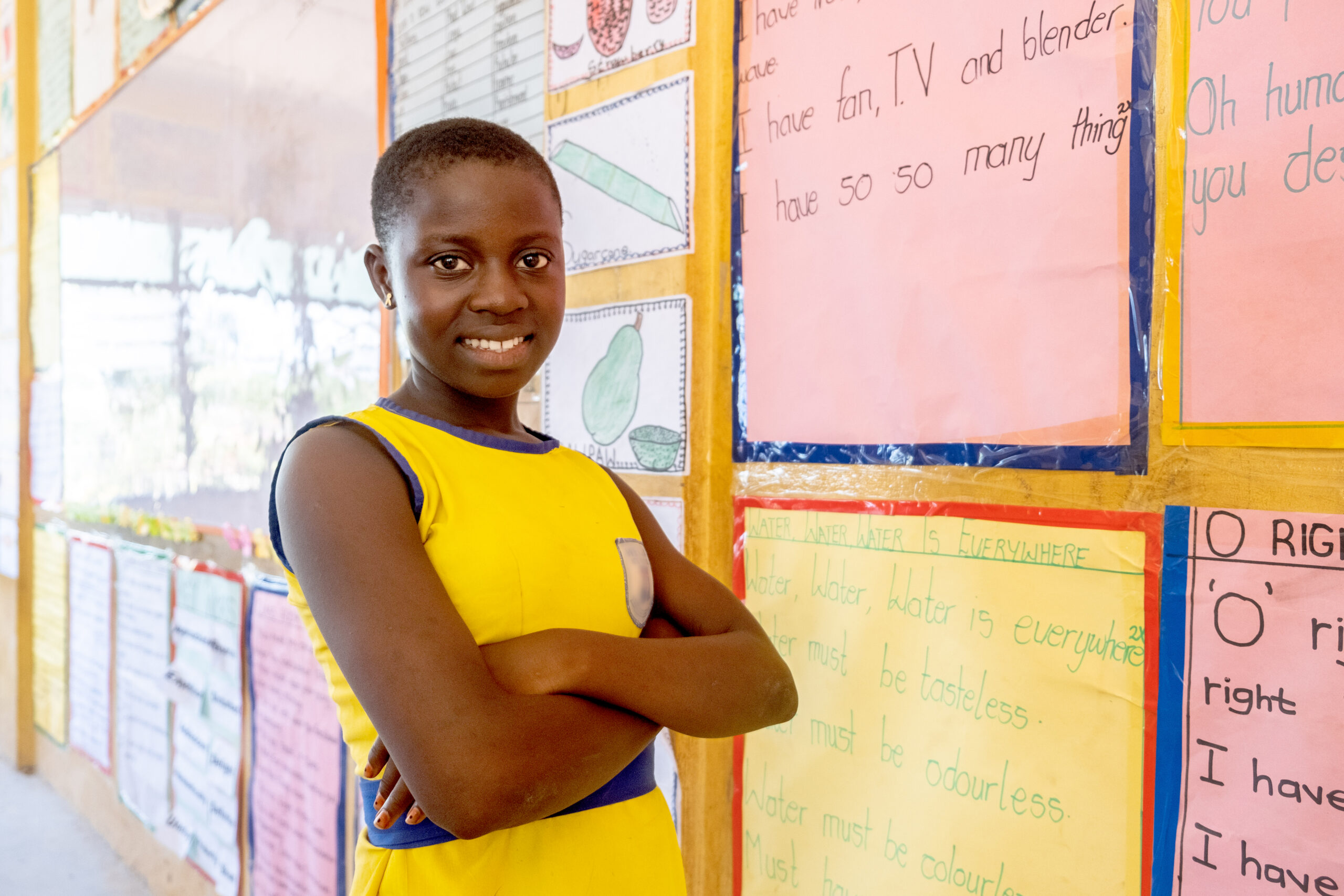
 In Accra, Ghana, thousands of children live on the streets without access to education, safety, or opportunity. Thirteen-year-old Aisha dreams of becoming a journalist so she can speak out against child labor and homelessness and advocate for vulnerable children like them.
But Aisha was not always confident in herself or hopeful about her future.
A few years ago, she struggled to engage in school, found it difficult to participate in class, and was too shy to speak in front of others. Although she loved reading and learning, she often kept to herself and did not believe she could become a leader.
That began to change through Right To Play’s play-based learning programs at her school.
Using games, teamwork activities, storytelling, and student-led discussions, Aisha’s teachers created a classroom environment where children could build confidence, communication skills, and leadership abilities while learning. One teacher in particular, Freda, recognized Aisha’s curiosity and encouraged her to explore her interests and express her ideas.
When her teacher Freda explained what journalists do — researching issues, telling stories, and helping communities understand social challenges — something clicked for Aisha. She realized journalism could combine her love of reading with her desire to help vulnerable children.
Still, the idea of speaking publicly terrified her. With encouragement from her teacher, Aisha began practicing interviewing, writing, and presenting stories in class. Gradually, she developed the confidence to speak in front of others.
“I can now talk in public without shivering or panicking,” Aisha says proudly.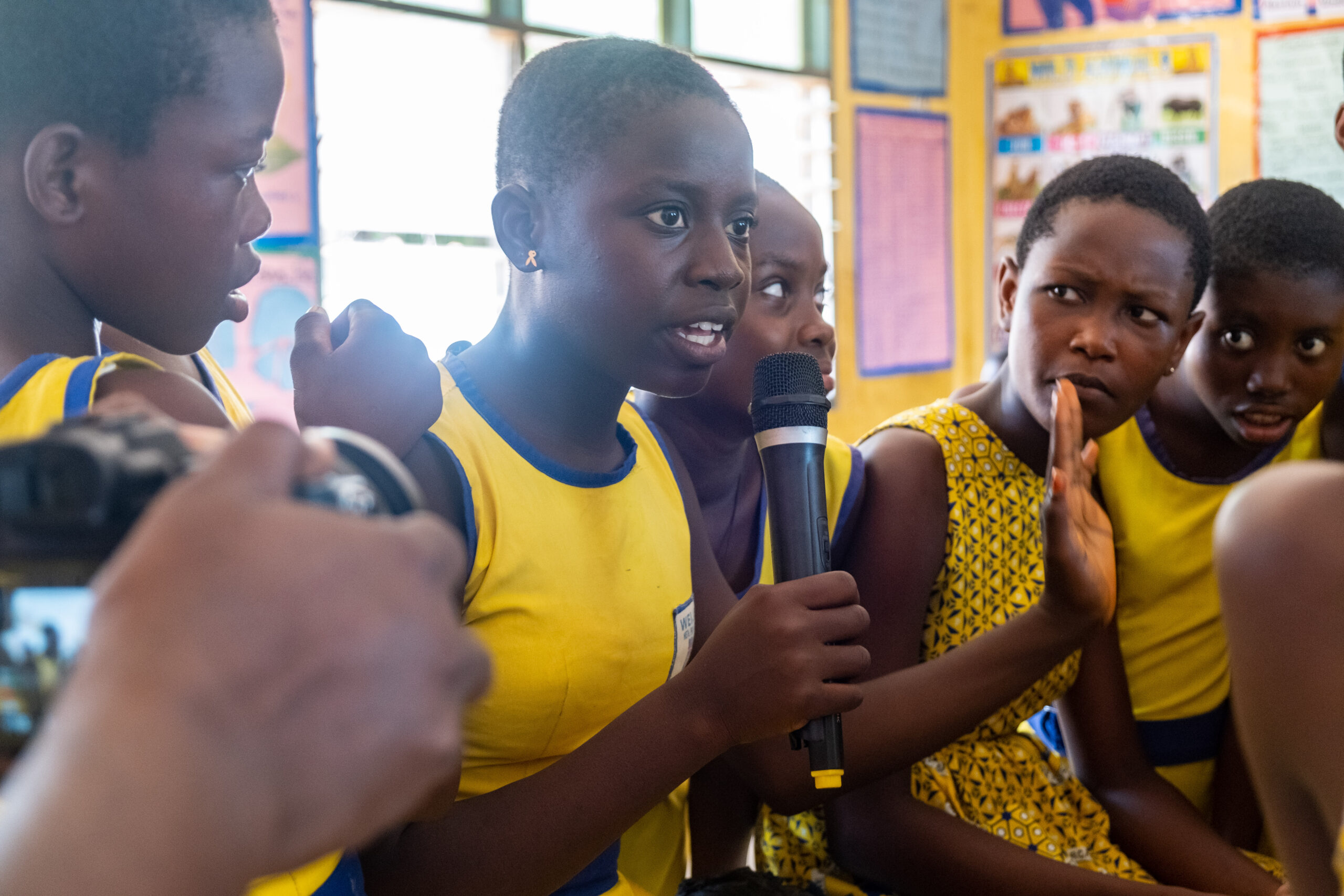 As her confidence grew, so did her sense of responsibility toward other children. Aisha joined her school’s Child Rights Club, led by a Right To Play-trained teacher. Through games and activities, children learn about their rights while building practical skills like leadership, goal-setting, teamwork, and advocacy.
There, Aisha learned that every child has the right to education, food, safety, and protection. Soon, she began facilitating activities herself and became known among her peers as a leader.
One day, several students approached Aisha with concerns about shrinking meal portions at the school canteen. Rising inflation had caused food portions to decrease, leaving many students hungry during the school day.
In the past, Aisha would never have spoken up. But now, she felt empowered to act. She took a plate of food directly to the headmistress’s office and explained how hunger was affecting students’ ability to learn and thrive. She advocated for larger meal portions so children could focus in class and stay healthy.
The headmistress listened carefully and brought the issue to the school administration. Soon after, the meal portions were increased.
“I felt happy and proud of myself,” Aisha says.
Today, Aisha continues to speak up for children facing homelessness, exploitation, and exclusion from school. She believes change is possible when communities work together to protect children’s rights and ensure every child feels safe, supported, and valued.
Through play-based learning, mentorship, and opportunities to lead, Aisha has transformed from a shy student into a confident advocate for her peers — and she is only just beginning to build her vision for the future.